

PLC Controller
A PLC Controller is the backbone of modern industrial automation, delivering precise, reliable control for machines and processes. Designed for high-performance environments, PLC controllers from leading brands support digital and analog I/O, fast processing, and seamless integration with sensors, motors, and HMIs.
PLC Controller | Industrial Automation Control Systems
Showing all 5 results
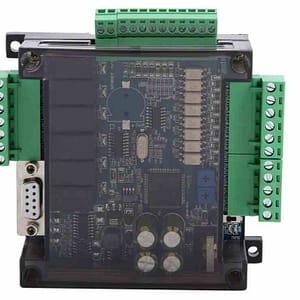


PLC Controllers for Industrial Automation Applications
A PLC Controller (Programmable Logic Controller) is a specialized industrial computer used to automate machinery, production lines, and process systems. Unlike traditional control panels, PLC controllers are designed to operate continuously in harsh environments involving vibration, electrical noise, temperature variation, and dust.
PLC controllers are widely used across industries such as manufacturing, water treatment, power generation, packaging, material handling, and infrastructure automation. They control equipment like motors, pumps, conveyors, compressors, valves, and robotic systems with high reliability and accuracy.
Modern PLC controllers support multiple input and output configurations, including digital I/O, analog I/O, high-speed counters, and communication modules. Many models offer Ethernet, Modbus, Profibus, CAN, and serial communication, allowing seamless integration with HMIs, SCADA systems, VFDs, and IoT platforms.
When selecting a PLC controller, important factors include processing speed, memory capacity, number of I/O points, expandability, and supported communication protocols. Compact PLCs are ideal for small machines, while modular PLC systems are preferred for large-scale automation projects due to their scalability and flexibility.
PLC controllers also provide advantages such as easy programming, real-time diagnostics, low maintenance, and long service life. Popular programming languages include Ladder Logic, Function Block Diagram, and Structured Text, making PLCs accessible for both maintenance engineers and automation specialists.
By choosing the right PLC controller, industries can improve productivity, reduce downtime, enhance process accuracy, and achieve efficient automation control.
FAQ Section
What is a PLC controller used for?
A PLC controller is used to automate and control industrial machines and processes such as motors, pumps, conveyors, and production lines.
What industries use PLC controllers?
PLC controllers are commonly used in manufacturing, water treatment, oil & gas, power plants, packaging, and infrastructure automation.
How do I choose the right PLC controller?
Consider the required I/O count, processing speed, communication protocols, expandability, and environmental conditions of your application.
What is the difference between PLC and relay control?
PLCs offer faster operation, easy reprogramming, diagnostics, and compact design compared to traditional relay-based control systems.